Chapter 6: Transport of People and Goods
1. Transporting people
It is forbidden to exceed the maximum number of authorized seats of a vehicle. The driver is required to make passengers maintain the proper position.
In vehicles with up to 9 seats, minors who are 1.35 m tall or shorter must use an approved child restraint appropriate to their size and weight, normally in a rear seat.
There are 3 exceptions whereby they may use a front seat with the appropriate restraint: no rear seats; all rear seats already occupied by children subject to this rule; or not all required child restraints can be installed there. A rear-facing restraint in front requires the frontal airbag to be deactivated.
If the vehicle is very old and does not have seat belts, children under 3 years may not ride in it.
Seat belts are compulsory where fitted, on all roads. From 1 October 2026, the former exemptions for taxi drivers, delivery drivers and driving instructors no longer apply. Exceptions remain for drivers reversing or parking, a valid medical exemption, and emergency-service occupants in towns (not motorways, dual carriageways or conventional roads); ambulance staff giving care in the patient compartment during an emergency are exempt on all roads. In urban taxi traffic, children under 135 cm may still travel in a rear seat without a child restraint.
An adult cyclist may carry a child weighing up to 22 kg who can sit unaided in an approved additional seat. On interurban roads, transporting passengers or cargo is allowed only by day with good visibility.
On motorcycles and mopeds, a passenger normally must be at least 12; from age 7, they may ride with a parent, guardian or an adult authorised by them. Use the authorised rear seat, sit astride with feet on the footrests, and wear the required protective equipment.
2. Transporting goods
You must never exceed the authorized MAM (total weight including load).
As a general rule, load cannot extend out of the vehicle, except:
1. Passenger cars
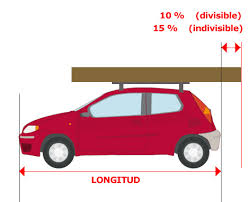
Load may only extend out through the rear of the vehicle taking into account the following:
- If DIVISIBLE (can be taken apart), 10% of the vehicle length.
- If INDIVISIBLE (cannot be taken apart), 15% of the vehicle length. E.g. an iron beam.
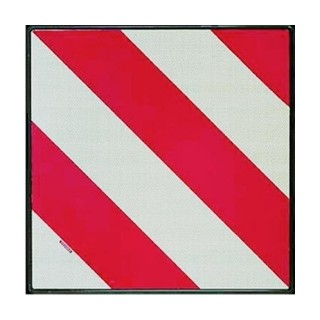
In both cases, a red and white striped panel must be placed both during the day and at night, as well as a red light at night (or in environmental conditions of low visibility).
2. Vehicles used for the transport of goods
In vehicles designed for the transport of goods, the transport of persons in the area designed for load is prohibited unless with authorization.
Length (indivisible loads in goods vehicles):
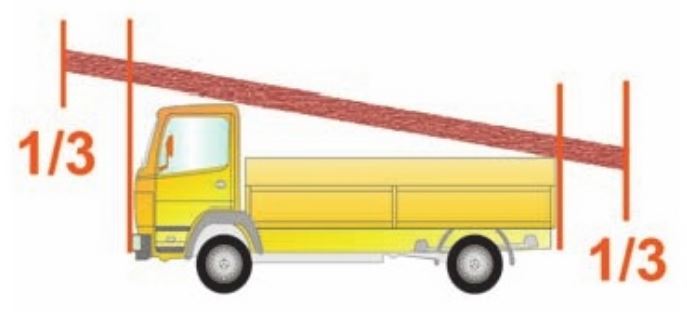
- If the vehicle measures 5 metres or less, load may extend 1/3 of the length of the vehicle in front and behind.
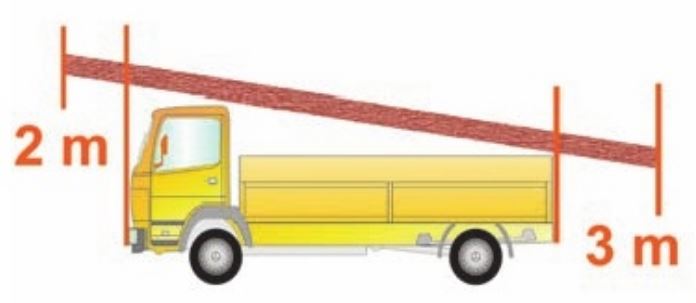
- If over 5 metres, load may extend up to 2 metres in front and 3 metres behind, within the applicable maximum dimensions.
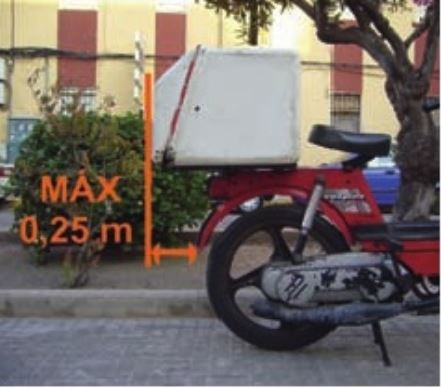
- If the vehicle is LESS than one metre wide (motorcycles), load may not extend out in front, but can extend 0.25 metres behind.
| 5 metres or less | over 5 metres | Less than one metre |
|---|---|---|
 |
 |
 |
Width:
- In a goods vehicle, if an indivisible load is wider than the vehicle even in its narrowest dimension, it may extend 0.40 metres on each side, without exceeding a total width of 2.55 metres.
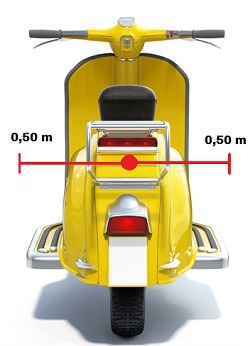 If the vehicle is LESS than one metre wide (motorcycles), load may extend 0.50 metres on each side of the vehicle axis.
3. Signalling of the load
If it extends out in front:
- Not signalled during the day
- At night or in conditions that significantly reduce visibility, it is signalled with a white light on the overhanging part.
If it extends behind (vehicles at least 1 metre wide):
- By day, it is signalled by a red and white V-20 panel; if the load spans the vehicle’s full width, use two panels forming an inverted V
- At night or in poor visibility, add a red light
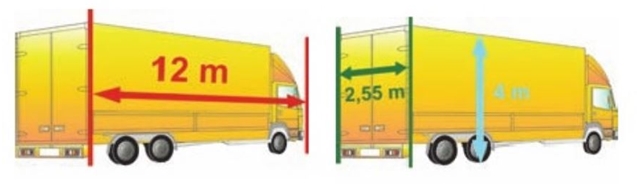
For an ordinary rigid motor vehicle other than a bus, the general maximum dimensions including load are 2.55 metres wide, 4 metres high and 12 metres long. Specific vehicle categories and combinations have different limits.
4. Rules on load
1. The load cannot fall to the ground, drag, obscure lights, or be deposited on public roads.
2. Load and unload off the road, avoiding noise. If roadside loading is unavoidable, obey stopping and parking rules and do not endanger or seriously obstruct traffic.
3. The load in passenger cars should be carried in the boot (UK) / trunk (USA), trailer or on the roof, or in the back seat provided it is securely fastened.
4. Motorcycles, three-wheeled motor vehicles and mopeds can tow trailers, but:
- The trailer must not exceed 50% of the towing vehicle’s unladen mass
- They must not transport people in the trailer
- They may travel only by day with good visibility
- When towing a trailer, the applicable generic speed limit is reduced by 10%; urban traffic is subject to municipal rules
Adult cyclists may use trailers meeting the applicable technical rules to carry people, animals weighing up to 15 kg, or cargo. Municipal restrictions apply in towns; on interurban roads, travel must be by day with good visibility.
Special vehicles:
- Must use the amber V-2 warning light when travelling on public roads at 40 km/h or less, and when road work creates a danger
- Road-construction or maintenance vehicles may depart from ordinary circulation rules only within the work area, taking precautions and with traffic properly regulated
- If the transported materials produce dust or may fall, they must be covered effectively
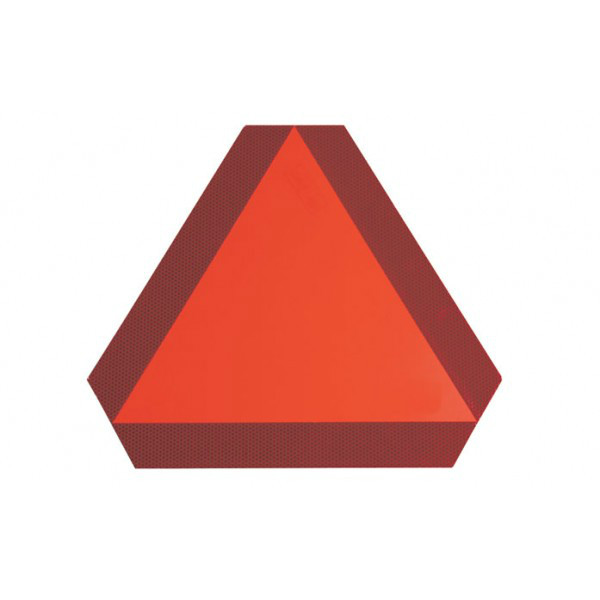
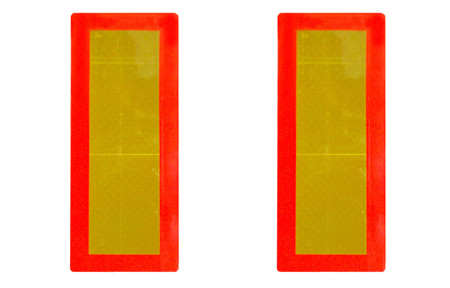
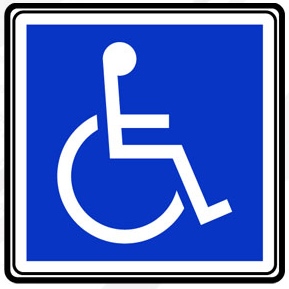
- Vehicle signs, see table below:
Speed limit
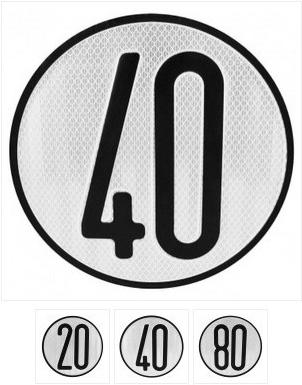
Slow vehicle: designed for no more than 40 km/h
Long vehicle: more than 12 metres
Reduced mobility and disability sign
Testing or research: specific authorisation may allow up to 30 km/h above the generic limit, outside urban roads and travesías, never above a specific signed limit

Overhanging load behind (protruding load)
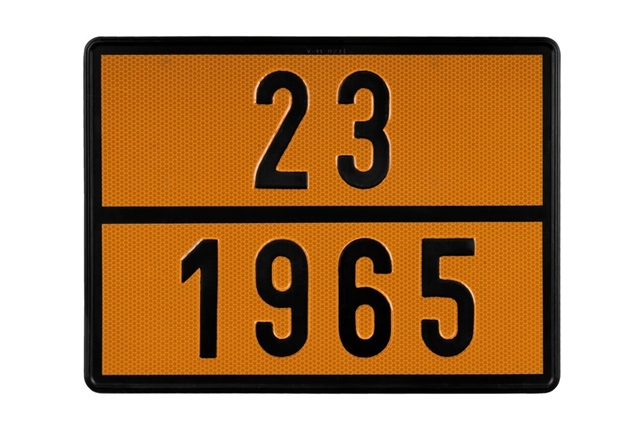
Dangerous goods
Connected V-16 emergency beacon: required for signalling an immobilised vehicle when applicable from 2026

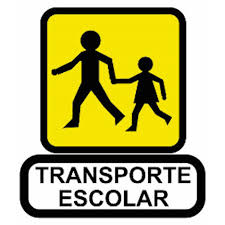
School transport
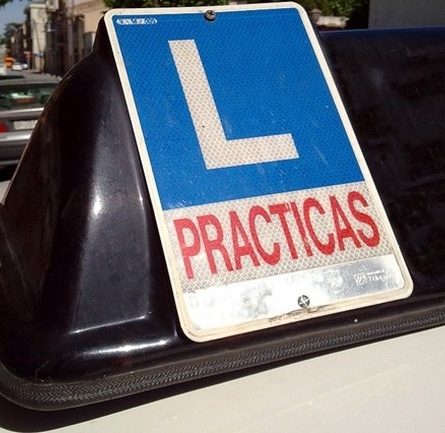
Driver education vehicle
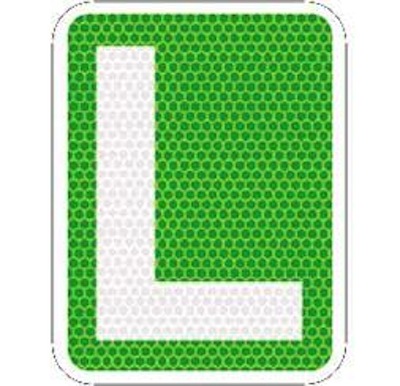
New qualified driver
MOT (ITV) sticker