How to get your Spanish driving license in English?
Content index
- Can you get a Spanish driving licence in English?
- Who can obtain a Spanish driving licence?
- Do you have to live in Spain for six months?
- Should you obtain a new licence or exchange your foreign one?
- What is the minimum age for a Spanish driving licence?
- Documents required to apply
- Step 1: Obtain the medical fitness report
- Step 2: Prepare for the theory test in English
- Can you study without attending a driving school?
- Step 3: Submit the examination application
- How much is the DGT examination fee?
- Step 4: Take the theory examination in English
- What subjects appear in the category B theory test?
- Does the theory test include videos?
- How can you avoid translation mistakes?
- When is the theory-test result available?
- How long is the passed theory test valid?
- Step 5: Take practical driving lessons
- Can practical lessons be given in English?
- Is the practical driving test conducted in English?
- What happens during the practical test?
- How are practical-test faults classified?
- How much does the process cost?
- What happens after passing the final test?
- Rules for newly qualified drivers
- Can you change driving schools?
- Can you obtain the licence without speaking Spanish?
- Common mistakes made by English-speaking applicants
- Frequently asked questions
- Can I take the category B theory test in English?
- Is the Spanish driving licence printed in English?
- Do I need six months of residence?
- Can I apply with only a NIE number?
- How many questions are in the category B theory test?
- How many mistakes are allowed?
- Can I study theory independently?
- Is the practical test available in English?
- How long is the medical report valid?
- How many examination attempts does the fee include?
- How long is a passed theory test valid?
- Can I drive immediately after passing?
- Conclusion
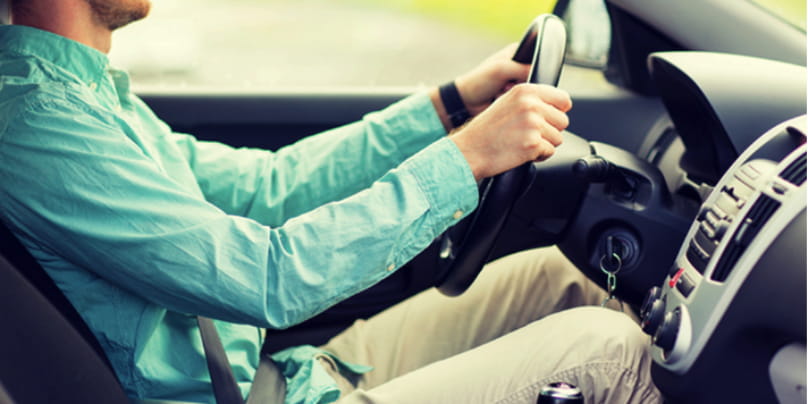
If you live in Spain and need to obtain your first Spanish driving licence, you can prepare for and request the category B theory examination in English.
However, the licence application is still a Spanish administrative procedure. Official forms, notifications and practical-test arrangements may be processed in Spanish, and the availability of English-speaking instructors varies between driving schools.
To obtain the ordinary category B licence, you must satisfy the residence and age requirements, pass a medical assessment, submit the application and pass both the theory and practical driving tests.
This guide explains the complete process for English-speaking applicants in 2026.
Can you get a Spanish driving licence in English?
Yes. The DGT theory examination for the category B licence can be requested in English where that language option is available through the examination system.
You should indicate the chosen language when the examination application is submitted. If a driving school manages your file, confirm in writing that it has requested the English version.
You can also use:
- English theory manuals.
- Online lessons in English.
- English practice tests.
- Bilingual tutors.
- Driving instructors who can explain the practical rules in English.
Nevertheless, it is advisable to learn common Spanish traffic terms because they appear on road signs, information panels, administrative documents and instructions used in everyday driving.
Who can obtain a Spanish driving licence?
To obtain a new Spanish licence, you must generally:
- Have normal residence in Spain or prove the required period of study in Spain.
- Meet the minimum age for the requested licence.
- Not be legally deprived of the right to drive.
- Not have the requested licence suspended or administratively restricted.
- Meet the required physical and psychological conditions.
- Pass the corresponding theory and practical tests.
- Not hold another equivalent EU or EEA licence that remains valid.
Nationality is not the determining factor. A foreign citizen can obtain a Spanish licence when the legal residence, identification, medical and examination conditions are satisfied.
Do you have to live in Spain for six months?
Not every applicant must wait six months after becoming a resident.
The regulation distinguishes between:
- Normal residents: people whose normal residence is in Spain.
- Students: people who can demonstrate that they have been studying continuously in Spain for at least six months.
Normal residence generally refers to the country where you usually live for at least 185 days per calendar year because of personal or occupational ties.
Therefore, the statement that every foreign applicant needs six months of previous Spanish residence is incorrect. The specific six-month period applies to applicants relying on their status as students.
The broader process is covered in our guide on how to obtain a driving licence in Spain.
Should you obtain a new licence or exchange your foreign one?
Before applying for a new Spanish licence, check whether your existing foreign licence is valid in Spain or can be exchanged.
You may not need to take the complete theory and practical tests when:
- You hold a valid EU or EEA driving licence.
- Your licence was issued by a country with an exchange agreement with Spain.
- You satisfy the dates, residence and verification requirements of that agreement.
A valid EU or EEA licence can generally be used in Spain while it remains in force, subject to the applicable Spanish validity and residence rules.
Licences from countries with an exchange agreement may qualify for a Spanish equivalent without examinations for ordinary motorcycle and car categories. Professional categories can require additional tests.
What is the minimum age for a Spanish driving licence?
The minimum age depends on the category:
- AM: 15 years for mopeds and the vehicles authorised by this category.
- A1: 16 years for motorcycles up to the corresponding power and engine limits.
- A2: 18 years for motorcycles within the A2 power limits.
- A: 20 years, after holding A2 for at least two years and completing the required training.
- B: ordinarily 18 years for cars and other authorised vehicles.
- C1: generally 18 years.
- C: generally 21 years, subject to possible professional-training provisions.
- D1: generally 21 years, subject to possible professional-training provisions.
- D: generally 24 years, with lower ages possible under the applicable professional qualification rules.
The ordinary category B licence authorises cars and other qualifying vehicles with a maximum authorised mass not exceeding 3,500 kilograms and designed to carry no more than eight passengers in addition to the driver.
An applicant may take the first theory test up to three months before reaching the minimum age required for the requested category. This does not authorise independent driving before the licence can legally be obtained.
Documents required to apply
The precise documentation can vary according to nationality, residence status and how the application is submitted.
You may need:
- The official examination application.
- A valid DNI, passport or accepted identity document.
- A foreign identity number or residence documentation, when applicable.
- Evidence of normal residence in Spain.
- Evidence of six months of continuous study when applying as a student.
- A psychophysical fitness report.
- Proof of payment of the DGT fee.
- A recent photograph when required by the application channel.
- A declaration concerning other driving licences and legal restrictions.
A NIE number alone does not always prove normal residence. The competent authority may require additional residence documentation.
If a driving school submits the application, it will normally check and forward the documents. If you apply independently, confirm the requirements with the relevant Traffic Headquarters before attending.
The general documentation rules are explained in the topic on administrative requirements for driving a motor vehicle.
Step 1: Obtain the medical fitness report
Before applying for the examinations, you must obtain a psychophysical fitness report from an authorised Driver Recognition Centre.
The assessment normally considers:
- Vision.
- Hearing.
- Coordination.
- Reaction capacity.
- General physical condition.
- Medical conditions that may affect driving.
- Medicines or treatments relevant to road safety.
Tell the centre which licence category you intend to obtain.
The report must normally be used to submit the examination application within 90 days. Obtaining it too early may cause it to expire before your application is processed.
If a condition requires an adaptation or restriction, this can be recorded for the examination and the future licence.
Step 2: Prepare for the theory test in English
You can prepare through a traditional driving school, an online course or independent study.
Good preparation should include:
- An updated category B manual.
- Complete 30-question practice tests.
- Tests organised by subject.
- Explanations for incorrect answers.
- Current Spanish traffic signs.
- Hazard-perception exercises.
- Spanish-English traffic vocabulary.
Avoid relying exclusively on memorised answers. The wording and images can change while the underlying rule remains the same.
Translated materials must be checked carefully because an inaccurate translation can change the meaning of words such as “must”, “may”, “except”, “only” or “normally”.
Can you study without attending a driving school?
Yes. Attendance at classroom theory lessons is not compulsory for an ordinary category B application.
You can:
- Study independently.
- Use an online course.
- Submit the examination application yourself.
- Take the official theory examination without having attended classroom lessons.
However, you must still satisfy the legal requirements, obtain the medical report and pay the DGT fee.
The practical stage normally requires an authorised driving school because the examination is conducted in a suitable dual-control vehicle with the required instructor.
Step 3: Submit the examination application
The application can be managed by a driving school or, for the corresponding procedure, submitted directly by the applicant.
If a school manages the file, confirm:
- That the examination language is English.
- Which documents are still required.
- Whether the DGT fee is included in the school’s price.
- How many examination calls remain.
- Which province or examination centre will be used.
If you apply independently, follow the DGT’s current application procedure and retain proof of payment and submission.
How much is the DGT examination fee?
The DGT fee for applying for the ordinary driving-licence tests is fee 2.1.
In 2026, the published amount is €94.05.
The fee gives the applicant two examination calls shared across the required tests. It does not provide two theory attempts and two practical attempts.
For example:
- Passing theory first time and practical first time completes the process under the initial fee.
- Passing theory first time and failing practical once leaves one call.
- Failing theory once and passing it on the second attempt uses both calls, so another fee is required before the practical test.
- Failing practical twice after passing theory requires another fee.
Driving-school training, practical lessons, medical examinations and vehicle use are not included in the official DGT fee.
Step 4: Take the theory examination in English
The ordinary category B theory examination normally consists of 30 multiple-choice questions.
Each question generally has three possible answers. To pass, the number of errors must not exceed 10% of the questions.
In a 30-question test, this means:
- 27 correct answers and 3 mistakes: pass.
- 28 correct answers and 2 mistakes: pass.
- 29 correct answers and 1 mistake: pass.
- 30 correct answers: pass.
- 26 correct answers and 4 mistakes: fail.
It is more precise to say that the candidate can make no more than three mistakes than simply saying that 27 correct answers are always sufficient, because the structure may differ for other licence categories or specific tests.
What subjects appear in the category B theory test?
The examination can include:
- Traffic signs and road markings.
- Priority rules.
- Speed limits.
- Overtaking.
- Stopping and parking.
- Motorways and conventional roads.
- Alcohol, drugs and medicines.
- Fatigue and distractions.
- Vehicle lighting.
- Safety distances.
- Vulnerable road users.
- Tyres and basic maintenance.
- Accident prevention.
- First actions after a traffic accident.
- Hazard perception.
Current vertical signs can be reviewed in the topic on traffic signs updated for 2026.
Does the theory test include videos?
The DGT examination system can include audiovisual questions designed to assess hazard recognition.
A video may show:
- A pedestrian or cyclist approaching a conflict point.
- A vehicle entering or leaving the road.
- A roundabout or intersection.
- An overtaking manoeuvre.
- An inappropriate speed.
- A distraction.
- A developing traffic hazard.
The purpose is to determine whether the applicant can recognise risk and select an appropriate response, rather than merely repeat a memorised rule.
When video content is included, the examination time can be adjusted to account for its duration.
How can you avoid translation mistakes?
When studying and taking the test in English:
- Read every question completely.
- Pay attention to qualifying words.
- Examine the whole image.
- Identify the type of road and vehicle.
- Do not answer according to the law of your home country.
- Learn the Spanish names of important signs and documents.
- Report unclear or contradictory study questions to your tutor.
Spanish traffic terminology does not always have one exact English equivalent. Understanding the rule is therefore more reliable than memorising one translated sentence.
When is the theory-test result available?
The result of a computer-based theory examination is normally published on the day of the test. Paper-based theory results are generally available from the following day.
The result can be checked through the DGT’s online examination-result service for a limited period. A driving school can also communicate the result.
How long is the passed theory test valid?
A passed examination is generally preserved for two years.
You must pass the remaining practical examination during that period. If the period expires before you obtain the licence, you may have to repeat the tests.
Changing driving schools does not automatically cancel a passed theory test. A transfer of the examination file may be necessary, particularly when changing province.
Step 5: Take practical driving lessons
After passing theory, you must prepare for the practical examination.
There is no single number of lessons suitable for every applicant. The number depends on:
- Previous driving experience.
- Vehicle control.
- Observation and hazard awareness.
- Knowledge of Spanish rules.
- Frequency of lessons.
- Confidence in real traffic.
- The complexity of the examination area.
- Whether you previously drove on the left.
An experienced foreign driver may require fewer lessons for vehicle control but still need training to correct habits that conflict with Spanish rules.
The practical test should be booked when you can drive safely and independently, not merely after completing a predetermined number of lessons.
Can practical lessons be given in English?
Some driving schools have English-speaking instructors, particularly in large cities and areas with international communities.
Before registering, ask:
- Whether the instructor teaches fully in English.
- Whether the same instructor will normally be available.
- Whether English lessons cost more.
- Which language is used for mock examinations.
- How practical-test directions will be prepared.
A bilingual instructor can explain the rules in English while also teaching the Spanish terms likely to appear during lessons and administrative procedures.
Is the practical driving test conducted in English?
You should not assume that the entire practical test will be conducted in English simply because you took the theory examination in English.
The practical test is primarily an assessment of driving ability, but you must understand the examiner’s route directions and safety instructions.
Before the examination:
- Ask the driving school what language arrangements are available locally.
- Learn standard directions in Spanish.
- Practise following road signs independently.
- Learn instructions involving turns, exits, parking and stopping.
- Ask how to respond if you do not understand a direction.
What happens during the practical test?
The practical test takes place on roads open to traffic in an approved vehicle.
The candidate may be asked to:
- Carry out preliminary safety checks.
- Move away safely.
- Follow directions or road signs.
- Drive on urban and interurban roads.
- Approach junctions and roundabouts.
- Change lanes.
- Join or leave a faster road.
- Stop or park.
- Perform the required category B manoeuvres.
The examiner evaluates observation, speed, priority, road position, signalling, safety distances, vehicle control and anticipation of risk.
A serious dangerous action, such as failing to yield or requiring the instructor to intervene, can result in an immediate failure.
The relative difficulty of both tests is explained in our article about the difficulty of getting a Spanish driving licence.
How are practical-test faults classified?
Faults are classified according to their seriousness:
- Eliminatory faults: serious behaviour that creates danger or fails an essential safety requirement.
- Deficient faults: significant errors affecting safety or normal traffic flow.
- Minor faults: less serious errors in observation, execution or vehicle control.
A candidate can fail through:
- One eliminatory fault.
- Two deficient faults.
- One deficient fault and five minor faults.
- Ten minor faults.
The classification depends on the complete circumstances and the effect on other road users.
How much does the process cost?
There is no single national total because private prices vary.
The principal expenses are:
- DGT fee 2.1: €94.05 in 2026.
- Medical fitness report.
- English theory materials or course.
- Driving-school enrolment and management.
- Practical lessons.
- Use of the school vehicle for the practical test.
- Additional fees and training if you fail twice.
The practical lessons normally represent the largest part of the budget. Ask every school for a written breakdown rather than relying on an advertised starting price.
Our detailed guide explains how much a Spanish driving licence costs in 2026.
What happens after passing the final test?
After passing the last required examination, you will receive a provisional driving authorisation.
The provisional licence:
- Is normally valid for three months.
- Allows you to drive within Spain.
- Does not ordinarily authorise driving abroad.
The definitive card is sent to the address recorded in the application. It normally arrives within approximately six weeks, although delivery times can vary.
You do not have to pay another ordinary issuance fee after passing, because issuance is included in the application procedure.
Rules for newly qualified drivers
A newly qualified driver normally begins with eight points.
During the first year, the driver must display the prescribed green “L” plate in the vehicle.
New drivers are subject to the specific alcohol limit applicable during the first two years after obtaining the licence. They must also comply with all general Spanish rules on speed, mobile-phone use, seat belts, child restraints and drugs.
Can you change driving schools?
Yes. You can change schools after beginning the process.
Before changing, check:
- Whether unused lessons are refundable.
- Whether a new enrolment payment is required.
- How the examination file will be transferred.
- Whether your theory pass remains valid.
- How many DGT calls remain.
- Whether the new school has an English-speaking instructor.
If the new school is in a different province, a formal transfer of the examination file may be needed.
Can you obtain the licence without speaking Spanish?
It is possible to complete much of the learning and take the category B theory test in English.
However, having no Spanish at all can make the process more difficult because:
- Official forms and notifications may be in Spanish.
- Not every school has English-speaking staff.
- Road signs can contain Spanish words.
- Variable-message panels use Spanish.
- Practical-test directions may not be fully available in English.
- Police, insurance and accident procedures normally take place in Spanish.
You do not need fluency, but learning basic traffic and administrative vocabulary is strongly recommended.
Common mistakes made by English-speaking applicants
- Assuming that a NIE alone proves normal residence.
- Waiting six months unnecessarily before applying as a normal resident.
- Failing to check whether a foreign licence can be exchanged.
- Using theory material translated from obsolete regulations.
- Not confirming the examination language.
- Expecting the practical test to be entirely in English.
- Applying after the medical report’s submission period has expired.
- Confusing two total calls with two attempts at each test.
- Booking the practical test before being ready.
- Failing to learn common Spanish directions.
Frequently asked questions
Can I take the category B theory test in English?
Yes, English can be selected where available in the DGT examination system. Confirm the chosen language when submitting the application.
Is the Spanish driving licence printed in English?
No special English version is issued. You receive the standard Spanish EU-format driving licence.
Do I need six months of residence?
Not when you qualify through normal residence. The six-month period specifically applies to applicants demonstrating their status as students.
Can I apply with only a NIE number?
A NIE identifies a foreign citizen but may not, by itself, prove normal residence. Additional residence documentation can be required.
How many questions are in the category B theory test?
The ordinary test normally contains 30 multiple-choice questions.
How many mistakes are allowed?
You can normally make no more than three mistakes in a 30-question category B theory examination.
Can I study theory independently?
Yes. Classroom theory attendance is not generally compulsory, and you can submit the corresponding application yourself.
Is the practical test available in English?
Do not assume that it will be conducted entirely in English. Ask the driving school and relevant examination centre about local arrangements and learn the standard Spanish directions.
How long is the medical report valid?
It must normally be used to submit the examination application within 90 days.
How many examination attempts does the fee include?
It includes two calls shared between the required tests. After two failures, a new application and fee are required.
How long is a passed theory test valid?
A passed test is generally preserved for two years.
Can I drive immediately after passing?
You must wait until the provisional driving authorisation is available. That document normally permits driving only within Spain.
Conclusion
You can obtain a Spanish category B driving licence while preparing and taking the theory examination in English.
You must have normal residence in Spain or qualify through six months of continuous study, obtain a medical fitness report, submit the application and pass the theory and practical tests.
The theory examination normally contains 30 questions and permits a maximum of three errors. The DGT fee provides two total examination calls, and a passed test remains valid for two years.
English materials and bilingual instructors can make the process easier, but you should also learn basic Spanish traffic vocabulary and confirm the language arrangements for the practical test.
Before applying for a new licence, check whether an existing foreign licence is valid or exchangeable. If a new licence is necessary, use updated study material and begin practical training with an authorised school that can support your language needs.
How to obtain a Spanish driving license?
Prepare your theory exam for Driving Online. Practicatest has all the DGT exams.
More information